Every multi-sport games is a construction project inside a construction project — and the line between permanent and temporary determines what the host city lives with for the next fifty years.
The Logic of Overlay
When an event organiser talks about overlay, they mean the temporary layer installed on top of existing or purpose-built venues: the scaffolded seating banks, the branded entry portals, the cabling runs, the timing boards, the catering units, the fencing that turns a public park into a controlled zone. Overlay is designed to be reversible. It arrives in shipping containers and leaves in them. It has a lifespan measured in weeks.
The case for it is straightforward: sports events are short, and cities are long.
The case for it is straightforward: sports events are short, and cities are long. A venue configured for twelve thousand spectators at the Universiade will, once the games end, serve a university or a municipality that needs perhaps two thousand seats on a regular weekend. Installing twelve thousand permanent seats to satisfy a two-week peak demand is a commitment that the host must then either maintain or demolish, and neither option is cheap. Temporary overlay lets you rent the capacity rather than own it.
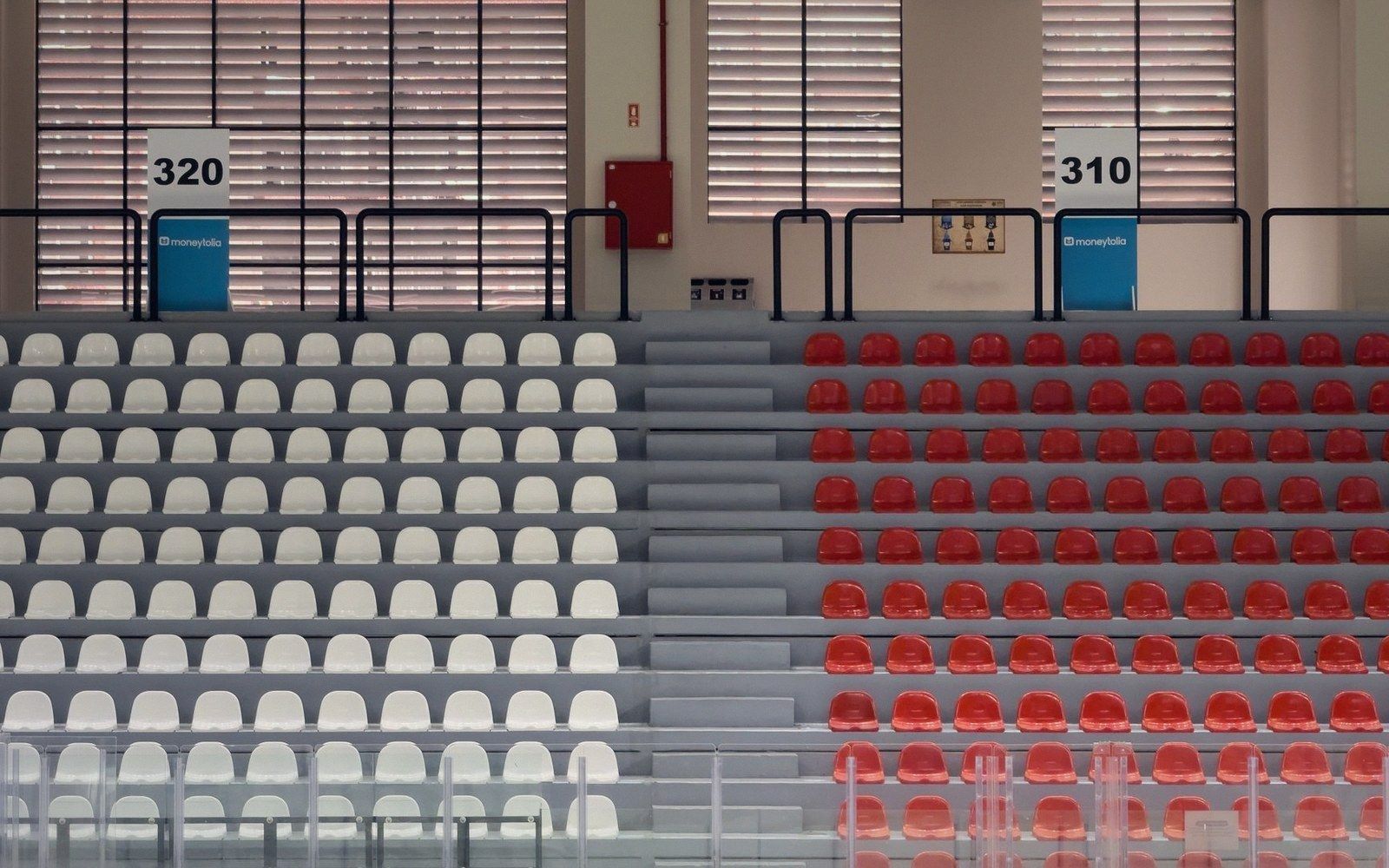
The structural seating used at several venues in Gwangju in 2015 was exactly this kind of equipment — modular aluminium tribune systems that spectator overlay companies routinely move from event to event, sometimes across continents between bookings. The scoreboards, the marshal barriers, the athlete call-room partitions: most of it was gone within weeks of the closing ceremony. That is a success condition, not a failure. The whole point is impermanence.
The Permanent Side of the Ledger
But no games is built entirely from overlay. The 2015 Gwangju Universiade required competition-grade permanent venues that either had to be constructed from scratch or substantially upgraded. The aquatics centre, the main athletics stadium, the gymnastics arena — these are facilities built to a specification that outlasts the games, because their structural and mechanical systems cannot simply be dismantled and removed. They are the part of the construction programme that the city keeps whether it wants to or not.
This is where the tension becomes real. Permanent venues represent a set of ongoing obligations: staffing, utility costs, maintenance, programming. A fifty-metre pool built to international competition standards is an expensive facility to run, and it earns its cost only if the post-games usage is genuinely high. The same is true of an athletics track that satisfies timing system requirements or a velodrome built to specific banking angles. These buildings are finely calibrated for a level of competition that occurs perhaps once every few years in any given region. For routine community sport, they are overbuilt, and overbuilt means overcost.
Gwangju prepared for this problem partly by anchoring several of its venues in the existing infrastructure of the city's universities and existing sports complexes — a logic that acknowledges the games as a short-term intensity imposed on a longer-term use pattern. Where a venue already served a university campus, the upgrade path after the games had a ready-made institutional owner. Where facilities were genuinely new and standalone, the legacy question was harder, and the city was left to construct a post-games usage argument that had not been fully tested before the ground was broken.
The Seating Problem in Miniature
The gap between temporary and permanent becomes most legible in seating. For a major final at a Universiade, the organiser needs a credible atmosphere — which means visible spectator mass, not rows of empty seats. For a mid-tier event in a sport that draws modest crowds even at peak competition, the same imperative does not apply. Overlay allows the organiser to scale seating to expected demand at each venue. It also allows the venue owner, post-games, to return to a footprint that actually matches their regular audience.
In Gwangju, as in most Universiades, the visible spectacle of temporary grandstands going up in the weeks before the opening ceremony and coming down in the weeks after it served a function beyond the purely practical: it marked the event as a distinct episode rather than a permanent transformation. The city did not pretend the games would change everything. The seating came down.
What did not come down were the structural decisions — the locations chosen, the specifications locked into concrete and steel, the utilities buried underground. Those decisions carry forward into the city's planning reality for decades. The argument for getting them right is not the games itself, which ends. The argument is the fifty years of programming, maintenance, and municipal budget that follows, in venues that will spend most of their lives hosting nothing that ever makes television.
The venues that found a second life after previous Universiades share one characteristic: their permanent infrastructure was modest enough that post-games demand could actually sustain it. Ambition at the design stage has a way of becoming burden at the operating stage, and the seating, at least, had the good sense to leave.